The short answer
Choose a composite door by checking its core and sub-frame quality, its security certification, the cylinder and multipoint lock, the glazing and U-value, then the colour and hardware to suit your home. Start with construction: a solid or well-insulated core in a sturdy sub-frame. Confirm the door carries a recognised security standard such as Secured by Design and uses an anti-snap cylinder. Check the thermal U-value if energy efficiency matters, and choose glazing, colour and furniture that fit the style of the property. Finally, vet the installer, ideally one registered with a competent-person scheme such as FENSA or CERTASS, and confirm the guarantee on both door and fitting.
A composite door is a long-term purchase, so it pays to work through construction, security, performance and installer quality in order.
What to check
- CoreSolid/insulated, sturdy frame
- SecuritySecured by Design, anti-snap
- ThermalCheck U-value
- GlazingPrivacy and toughness
- InstallerFENSA/CERTASS registered
Construction and security first
The most important checks are the ones you cannot see from a brochure photo. Ask about the core and sub-frame: a solid timber or insulated foam core in a robust timber or composite sub-frame gives strength, rigidity and a firm fixing for the lock. A flimsy frame undermines an otherwise good door, so this matters more than colour.
For security, look for a recognised standard. Secured by Design is the official UK police-backed accreditation, and PAS 24 is the security performance test many doors are assessed against. Pair this with an anti-snap, anti-bump, anti-pick cylinder (often a TS007 3-star cylinder or equivalent) and a quality multipoint locking system. These three things, certification, cylinder and lock, do more for security than the door material alone.
Thermal performance, glazing and looks
If energy efficiency matters, ask for the door's U-value, which measures heat loss; a lower number means better insulation. Composite doors generally perform well thanks to their insulated core, but glazing area and quality affect the figure. Building Regulations set minimum standards for replacement doors, so a reputable installer will fit a compliant door.
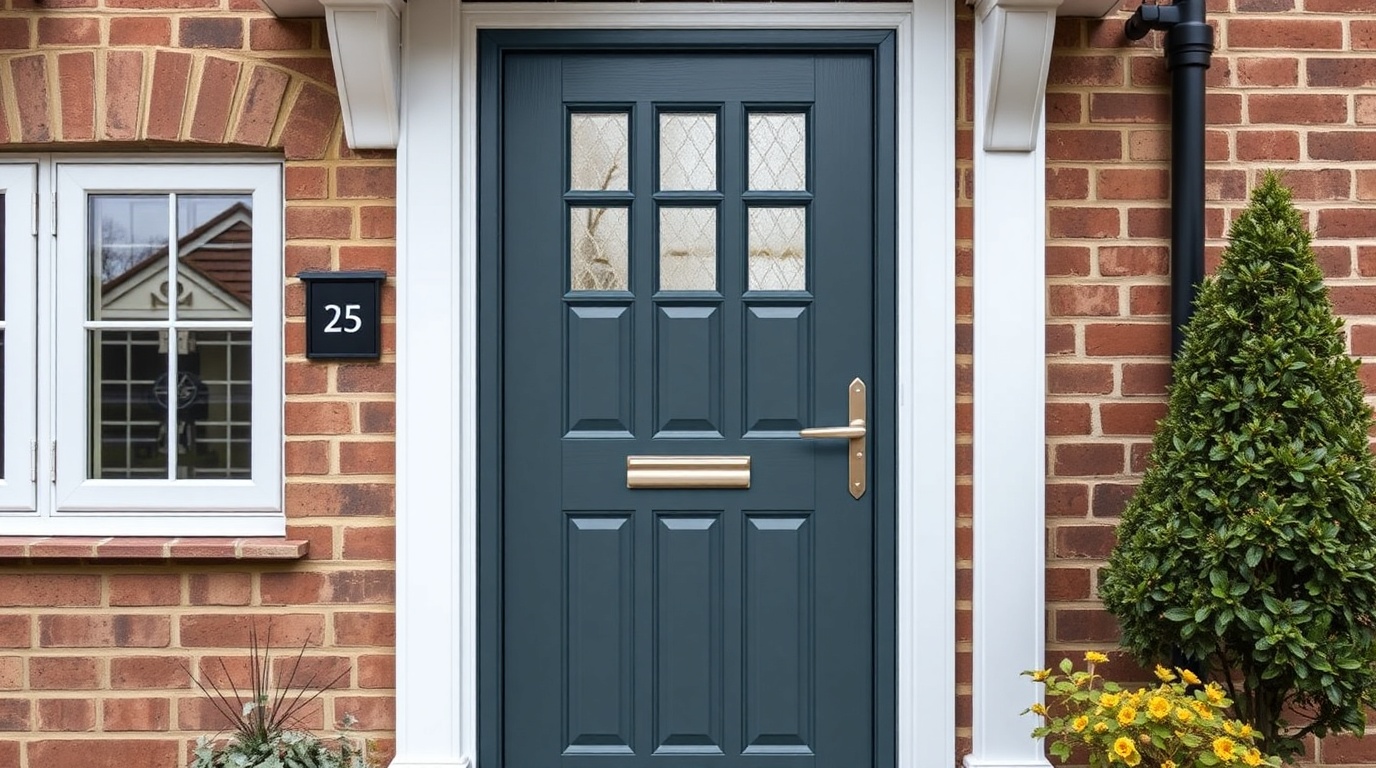
Choose glazing for the balance you want between light and privacy: clear, obscure, frosted or decorative glass, and toughened or laminated for safety and security. Then turn to appearance, where the choice is wide.
- Colour: a broad palette is available, from classic blues, greens and greys to wood-grain effects; consider the house style and any conservation rules.
- Style: panel layouts and glazing patterns range from traditional to contemporary.
- Hardware: handles, letterplates, knockers and hinges in finishes like chrome, black, gold or graphite.
Compare on the things that matter
Use a short checklist when comparing quotes so you are weighing like for like. Price alone can mislead if one door has a better core, certification and glazing than another. The table summarises the key points to confirm for each option.
| Check | Why it matters | What to look for |
|---|---|---|
| Core and frame | Strength and rigidity | Solid/insulated core, sturdy sub-frame |
| Security | Resistance to break-in | Secured by Design, PAS 24, anti-snap cylinder |
| U-value | Heat loss | Lower number, Building Regs compliant |
| Glazing | Light, privacy, safety | Toughened/laminated, privacy level |
| Guarantee | Long-term cover | Door and fitting warranties in writing |
Use this to get the work priced up on equal terms, not just price.
Vet the installer and guarantee
A good door fitted poorly will leak draughts, sit unevenly or fail to lock smoothly, so the installer matters as much as the product. Replacing an external door is notifiable under Building Regulations, so use an installer registered with a competent-person scheme such as FENSA or CERTASS, who can self-certify the work and issue a compliance certificate. This avoids needing separate building control sign-off.
Ask for references or reviews, confirm the company is established, and get the quote and specification in writing. Check the guarantee carefully: the door slab, the hardware and the installation may have different warranty periods, and you want all three covered. Confirm what the guarantee includes, how long it lasts and whether it is insurance-backed, so you are protected if a problem appears later.
Frequently asked questions
What security standard should a composite door have?
Look for Secured by Design accreditation, the UK police-backed standard, and ideally PAS 24 security testing. Pair this with a high-security multipoint lock and an anti-snap cylinder, such as a TS007 3-star cylinder, for strong break-in resistance.
Do I need a registered installer for a composite door?
Replacing an external door is notifiable under Building Regulations. Using an installer registered with a competent-person scheme such as FENSA or CERTASS lets them self-certify the work and issue a compliance certificate, avoiding separate building control sign-off.
What U-value should a composite door have?
A lower U-value means less heat loss. Building Regulations set a minimum standard for replacement doors, so a reputable installer will fit a compliant door. Composite doors generally insulate well, but ask for the specific U-value, as glazing affects it.
Sources & further reading
- HomeOwners Alliance — front doors guide
- Secured by Design — official police security accreditation
- FENSA — door and window installer registration
Figures on this page are typical UK ranges drawn from published sources and depend on your specific door and opening. They are guidance, not a quotation.