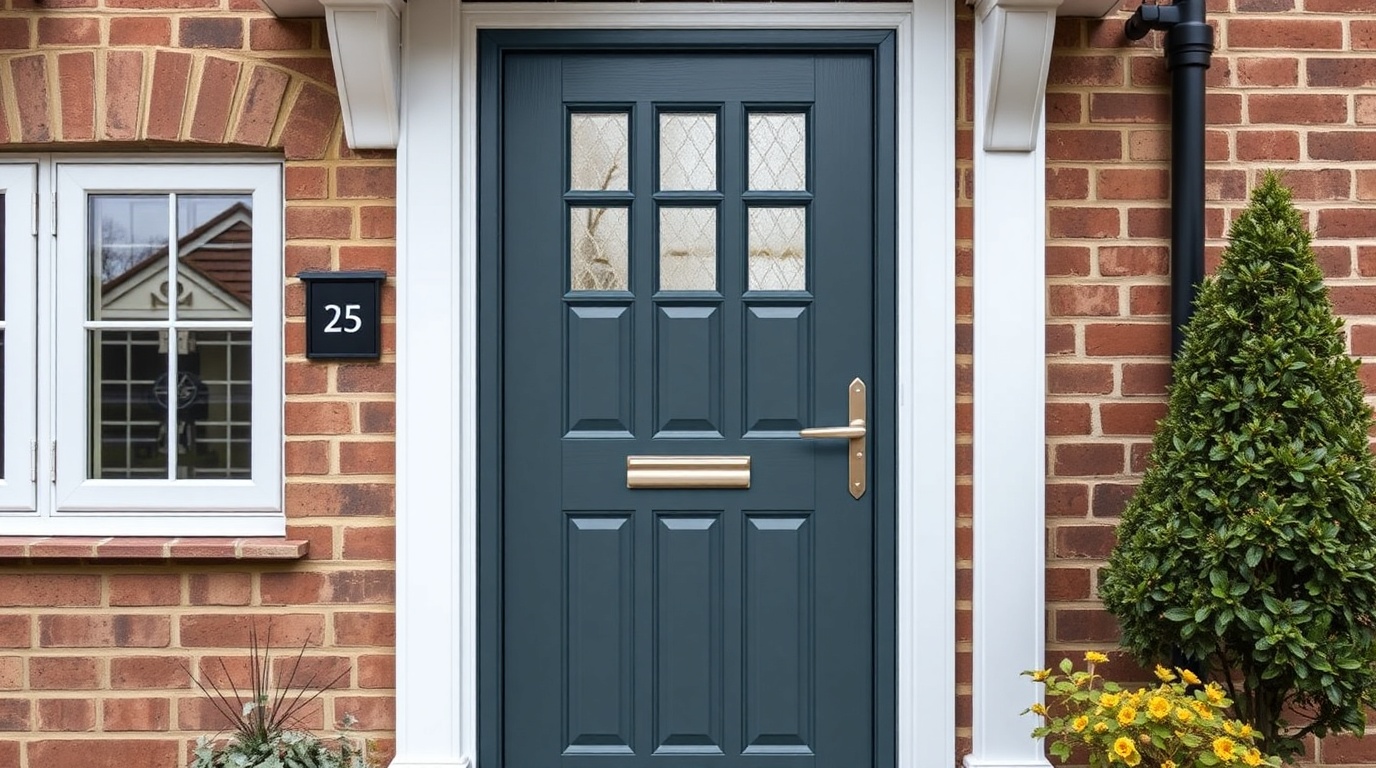
The short answer
Composite doors are generally among the more secure domestic doors, because their thick, multi-material build (often around 44mm) resists impact better than a thinner uPVC door and they are usually fitted with multipoint locking. But material alone is not proof — the standards are what matter. Look for PAS 24, the UK security test behind Part Q of the Building Regulations, which checks resistance to forced entry using tools and bodily force. Secured by Design is the police-backed accreditation that builds on PAS 24, and a TS007 3-star cylinder (or a 1-star cylinder paired with 2-star security hardware) protects against snapping, picking, drilling and bumping. A secure composite door is really a PAS 24 door with a 3-star cylinder and proper multipoint locking, fitted correctly.
Composite construction gives a strong starting point, but the security you can rely on comes from tested standards and the cylinder — not the material name. Here's what each rating means.
The standards that matter
- PAS 24forced-entry test (Part Q)
- Secured by Designpolice-backed accreditation
- TS007 3-staranti-snap/pick/drill cylinder
- Lockingmultipoint locking system
- Materialthick multi-material build
Why composite resists forced entry
A composite door wraps a solid or reinforced core in tough outer skins, so it is typically thicker and heavier than uPVC (commonly around 44mm against roughly 28mm) and harder to kick in or lever. Most are fitted with a multipoint locking system that bolts the door to the frame at several points. That construction is why composite doors are often described as more secure — but the weak point on any door is usually the cylinder, so the lock standard matters as much as the slab.
The standards to look for
Three things prove a door's security rather than just claim it. PAS 24 is the UK benchmark test the government chose for Part Q of the Building Regulations; it subjects the doorset to tools and increasing bodily force and the door must resist entry for a set period. Secured by Design is the official police initiative — a product must pass PAS 24 first, then gains police recognition as a crime-prevention design. TS007 grades cylinders from 1 to 3 stars; a 3-star cylinder resists snapping, drilling, picking and bumping on its own, or you can pair a 1-star cylinder with 2-star security handles to reach the same protection.
| Standard | What it covers |
|---|---|
| PAS 24 | Forced-entry test behind Part Q Building Regs |
| Secured by Design | Police-backed accreditation (requires PAS 24) |
| TS007 3-star | Cylinder resists snap, pick, drill, bump |
| Multipoint locking | Bolts door to frame at several points |
What to ask for on a new door. Sourced UK guidance from Secured by Design and cylinder-standard references.
Frequently asked questions
Are composite doors secure?
Generally yes — their thick, multi-material build and multipoint locking resist forced entry better than a thinner uPVC door. But security depends on the standards: look for PAS 24 testing, ideally Secured by Design accreditation, and a TS007 3-star cylinder.
What is PAS 24 on a door?
PAS 24 is the UK security test that checks a door's resistance to forced entry using tools and bodily force. It is the benchmark behind Part Q of the Building Regulations, so a PAS 24 door is built and tested to resist a determined break-in attempt.
What cylinder should a composite door have?
Look for a TS007 3-star cylinder, which resists snapping, picking, drilling and bumping on its own. Alternatively, a 1-star cylinder paired with 2-star security hardware reaches equivalent protection.
Sources & further reading
Figures on this page are typical UK ranges drawn from published sources and depend on your specific door and opening. They are guidance, not a quotation.