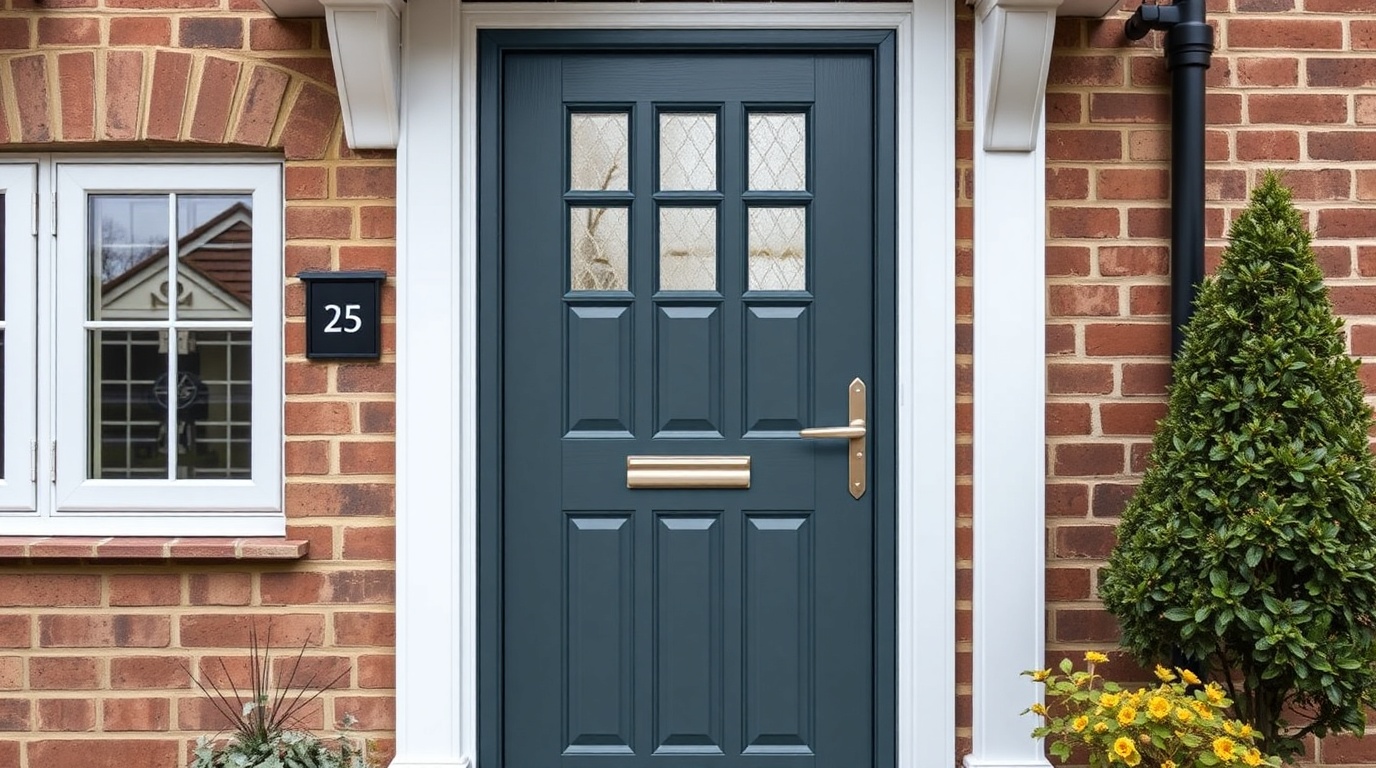
The short answer
A GRP foam-filled composite front door typically costs less than a solid-core composite door, often by a few hundred pounds for an equivalent size and finish. Both have a glass-reinforced plastic (GRP) outer skin, but a foam-filled door has an insulating foam core, while a solid-core door packs the inside with a dense timber or composite slab. The solid core feels heavier and more substantial and can offer better security and durability, which is why it costs more. For many front doors a quality foam-filled GRP door performs well; a solid core is a worthwhile upgrade on an exposed or high-priority entrance.
GRP refers to the outer skin both doors share; the real cost and performance difference lies in whether the core is insulating foam or a dense solid slab.
Quick reference
- GRP foam-filledLower cost, lighter, well insulated
- Solid-coreHigher cost, heavier, more robust
- SkinBoth use GRP outer skin
- Typical gapA few hundred pounds
What the terms actually mean
The terminology causes confusion because GRP describes the skin, not the whole door. Most composite front doors have a GRP outer skin for weather resistance and a woodgrain or smooth finish. The difference is the core behind that skin. The table sets out the two common constructions.
A foam-filled door uses a rigid insulating foam core, which keeps the door light and gives good thermal performance. A solid-core door fills the interior with a dense timber or composite slab, making it heavier and more solid to the touch, with potential gains in security and impact resistance. Both are sold as composite doors, so it is worth asking which core a quote refers to.
| Feature | GRP foam-filled | Solid-core |
|---|---|---|
| Outer skin | GRP | GRP |
| Core | Insulating foam | Dense timber / composite |
| Weight | Lighter | Heavier |
| Relative cost | Lower | Higher |
| Feel and robustness | Good | More substantial |
General comparison for guidance. Sources: Checkatrade composite doors buying guide and HomeOwners Alliance.
The cost difference explained
A solid-core door costs more for straightforward reasons:
- More material — a dense slab core uses more, and heavier, material than a foam fill.
- Heavier construction — the extra weight needs robust hinges and a stronger frame, and is more awkward to handle and fit.
- Perceived and actual robustness — the solid feel and improved impact resistance command a premium.
The gap is often a few hundred pounds for an equivalent size, colour and glazing, though it varies by manufacturer and specification. Fitting costs are broadly similar for both, since the labour to remove an old door and fit a new one is much the same, though the heavier solid-core door can take marginally longer to handle.
Which represents better value
For many homeowners a good-quality foam-filled GRP door is perfectly adequate for a front entrance, offering solid security, good insulation and the same low-maintenance skin as a solid-core door, at a lower price. It performs well on a typical front door that is not unusually exposed.
A solid-core door is a worthwhile upgrade where the door is heavily exposed to weather, faces a security concern, or where the homeowner simply values the heavier, more reassuring feel of a solid slab when the door is opened and closed. On a main door you plan to keep for decades, the extra cost can be justified by the durability and security; on a sheltered or secondary door, the foam-filled option usually makes more sense.
How to get the work priced up
Because both door types share the GRP skin and are marketed as composite doors, the only way to compare fairly is to confirm the core construction in each quote. Ask whether the door is foam-filled or solid-core, and match the size, colour, glazing and hardware so the only variable is the core. Then weigh the price difference against how much you value the extra weight, security and durability.
Check the warranty on each, as a recognised manufacturer's guarantee on the slab and skin matters more than the core type alone. Consider the locking system too: a strong multipoint lock contributes more to security than the core, so do not let a solid core distract from getting good hardware. Whichever you choose, an installer registered with FENSA or an equivalent scheme can self-certify the glazing, and a fitted quote keeps one company accountable for the door and the installation. For most front doors the decision comes down to budget and how exposed and important the door is: a quality foam-filled GRP door for everyday situations, a solid-core door where the extra robustness justifies the additional cost.
Frequently asked questions
Is a solid-core door more secure than a foam-filled one?
A solid core resists impact better and feels more substantial, which can help, but the locking system matters more for security than the core. A foam-filled door with a strong multipoint lock can be very secure, so prioritise good hardware whichever core you choose.
Does GRP mean the door is cheap?
No. GRP describes the glass-reinforced plastic outer skin used on most composite doors, including premium ones. The skin is durable and low-maintenance; the price difference comes from the core behind it, not the GRP itself.
Is a foam-filled door well insulated?
Yes. The rigid foam core gives good thermal performance, often comparable to or better than a solid-core door in insulation terms. The solid core's advantage is weight and robustness rather than insulation.
Sources & further reading
- Checkatrade — composite doors buying guide
- HomeOwners Alliance — front doors guide
- Which? — front doors advice
Figures on this page are typical UK ranges drawn from published sources and depend on your specific door and opening. They are guidance, not a quotation.