The short answer
GRP (glass-reinforced plastic) is a tough, fibre-reinforced skin with a deep, realistic wood-grain texture, while ABS (acrylonitrile butadiene styrene) is a smooth, impact-resistant thermoplastic skin that holds colour well and resists denting. GRP skins are the most common on UK composite doors and are valued for their authentic timber-effect grain and durability. ABS skins, used by some brands, are noted for impact resistance, colour stability and a smooth or lightly textured finish that resists fading. Both are weatherproof, low maintenance and used on quality doors. The difference is mainly in texture, feel and how each handles knocks and UV exposure over time, rather than one being clearly superior.
The skin is the door's visible, weatherproof outer layer, and the two main types feel and weather slightly differently.
Quick reference
- GRPGlass-reinforced plastic
- ABSAcrylonitrile butadiene styrene
- GRP grainDeep, realistic
- ABS finishSmooth, colour-stable
- BothWeatherproof, low upkeep
GRP and ABS compared
The table sets out the practical differences between the two main composite-door skin materials. Both form the tough, weatherproof outer face bonded to the door's core, both are low maintenance and both are used on reputable UK doors. The choice tends to be brand-led, as some manufacturers build around GRP and others around ABS, but it helps to understand how each behaves.
GRP is a plastic reinforced with glass fibres, moulded to give a deep wood-grain texture. ABS is an engineering thermoplastic known in many products for toughness and impact resistance, used on doors as a smooth or lightly grained skin that holds colour consistently.
| Feature | GRP skin | ABS skin |
|---|---|---|
| Material | Glass-reinforced plastic | ABS thermoplastic |
| Grain texture | Deep, realistic wood grain | Smooth or light grain |
| Impact resistance | High | Very high, resists denting |
| Colour stability | Good | Very good, fade-resistant |
| Weatherproofing | Excellent | Excellent |
| Common UK use | Very common | Used by some brands |
Indicative comparison; performance varies by manufacturer and finish.
Texture and appearance
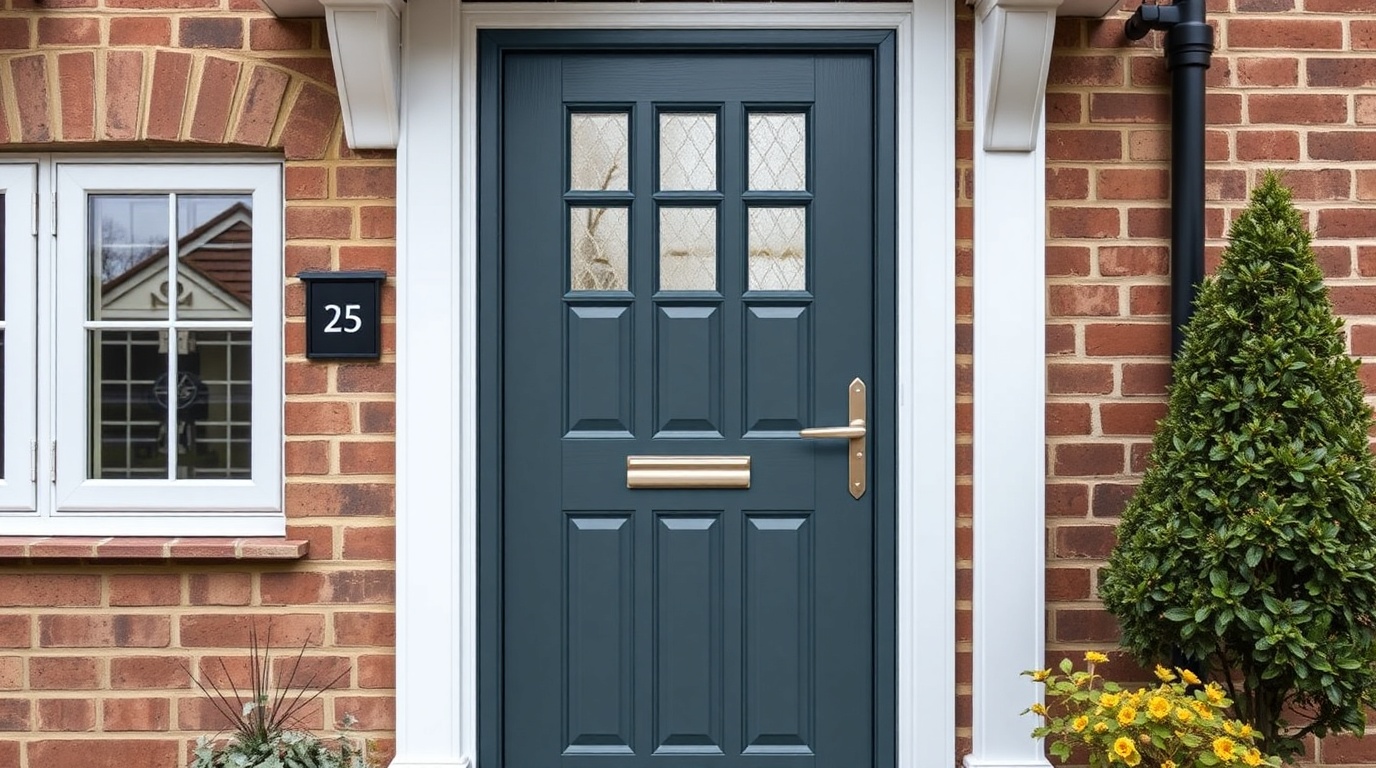
For a realistic timber look, GRP skins are hard to beat. The moulding process produces a deep, defined wood grain that, combined with the right colour, mimics painted or stained wood convincingly. This is a major reason GRP is so widely used on UK composite doors aimed at traditional and period-style homes.
ABS skins tend to have a smoother surface or a lighter grain, which can suit a cleaner, more contemporary look. ABS holds colour extremely well, so bright and bold shades stay vivid, and the smooth finish is easy to wipe clean. Neither is better in absolute terms; it depends on whether you want pronounced timber grain or a sleeker, colour-stable surface.
Durability and weather resistance
Both skin types are designed to withstand years of British weather without painting, and both resist warping, swelling and rot. GRP is very tough and stands up well to general wear and weather. ABS is particularly noted for impact resistance, so it can resist denting from knocks and trolley or pushchair bumps especially well.
On UV and colour, ABS is often praised for fade resistance, keeping its colour through long sun exposure, while quality GRP skins also hold colour well, especially in mid and darker tones. Both shrug off rain, frost and salt-laden coastal air when correctly fitted and sealed. In normal use either should look good for many years with only an occasional clean.
Which to choose
Because the skin is usually built into a specific manufacturer's door, the practical decision is often between brands rather than skins alone. If a deep, realistic wood grain matters most, GRP-skinned doors give that pronounced timber effect. If you want a smooth, colour-stable, knock-resistant surface and a slightly more modern finish, an ABS-skinned door may appeal.
Both are durable, weatherproof and low maintenance, so neither is a wrong choice. Look at finished sample doors in person, check the colour range and grain, and weigh the skin alongside the door's core, sub-frame, locking and glazing, which together determine overall quality far more than the skin material in isolation. Whichever you pick, the skin should be backed by a manufacturer guarantee against fading and delamination.
Frequently asked questions
Is a GRP or ABS composite door skin more durable?
Both are very durable and weatherproof. GRP is tough and widely used, while ABS is especially noted for impact resistance and colour stability. Neither is clearly superior overall, and quality depends on the whole door, not just the skin.
Which skin looks more like real wood?
GRP skins generally have a deeper, more pronounced wood-grain texture, making them look closer to painted or stained timber. ABS skins are smoother or lightly grained, suiting a cleaner, more contemporary appearance.
Do ABS door skins fade in the sun?
ABS is well regarded for colour stability and fade resistance, holding bright and bold shades through long sun exposure. Quality GRP skins also resist fading, particularly in mid and darker tones. Look for a manufacturer guarantee covering colour and finish.
Sources & further reading
- HomeOwners Alliance — front doors guide
- Which? — buying a new front door
- Checkatrade — composite door cost guide
Figures on this page are typical UK ranges drawn from published sources and depend on your specific door and opening. They are guidance, not a quotation.