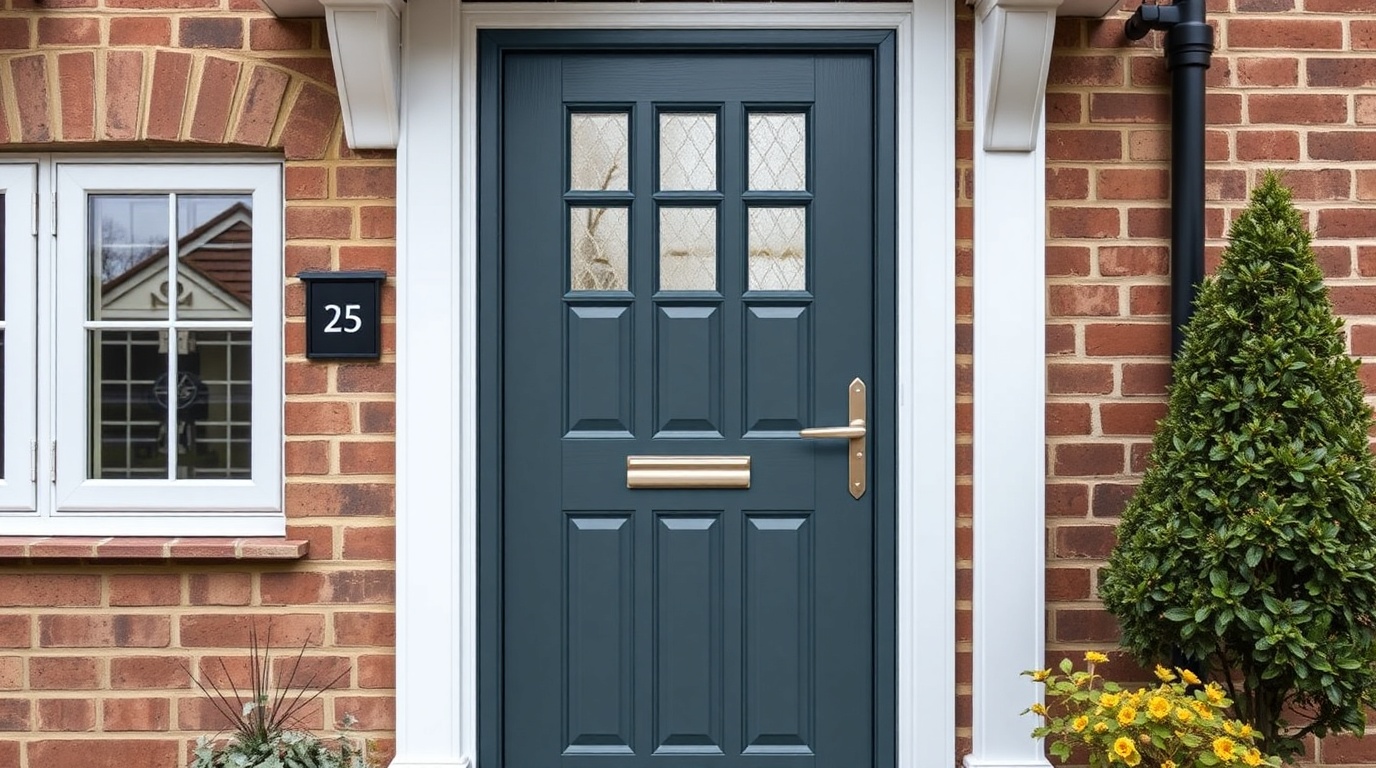
The short answer
Composite doors come with a choice of handles (lever or pull), a multipoint lock and cylinder, plus optional letterplates, door knockers, spy holes, numerals and hinges, available in finishes such as chrome, satin, black, gold, graphite and white. The core security hardware is the multipoint locking mechanism and the cylinder, which should be anti-snap, ideally a TS007 3-star unit. Handle styles range from modern lever-on-rose and pull handles to traditional designs. Decorative and functional extras include letterplates, knockers, escutcheons, numerals and spy holes, usually colour-matched in a chosen finish. Hinges are often available with security features. Matching the finish across all items gives a coordinated look.
Hardware covers both function and finish, from the security-critical lock to the handles and letterplate that complete the look.
Hardware items
- HandlesLever or pull
- LockingMultipoint + cylinder
- CylinderAnti-snap TS007 3-star
- ExtrasLetterplate, knocker, spy hole
- FinishesChrome, black, gold, graphite
Handles and finishes
The handle is the most visible piece of hardware and sets much of the door's character. Composite doors come with a range of handle types and finishes, usually colour-matched across all the door furniture for a coordinated look. The table summarises the common items and finishes available.
Handle styles include lever handles on a backplate or rose, and pull handles or bar handles for a more contemporary look. Finishes commonly include polished and satin chrome, black, gold or brass effect, graphite, white and antique styles. Choosing one finish across the handle, letterplate, knocker and any numerals keeps the door looking unified.
| Item | Options | Finishes |
|---|---|---|
| Handle | Lever, pull, bar | Chrome, black, gold, graphite, white |
| Cylinder | Standard or anti-snap | Keyed, often 3-star |
| Letterplate | Various sizes | Matched to handle |
| Knocker | Ring, urban, traditional | Matched to handle |
| Spy hole | Standard or wide-angle | Matched to handle |
| Numerals | House numbers | Matched to handle |
Match finishes across items for a coordinated appearance.
Locking and security hardware
The most important hardware is the locking system, because it determines security. Composite doors use a multipoint lock that throws several hooks, bolts or rollers into the frame when you lift the handle and turn the key, spreading the locking force and resisting forcing. This sits behind a cylinder, the part you put the key into.
The cylinder is the component most often attacked, so it should be anti-snap, anti-bump, anti-pick and anti-drill. A TS007 3-star cylinder, or a 1-star cylinder paired with 2-star security hardware, indicates this protection. If a door is supplied with a basic cylinder, upgrading to a 3-star anti-snap unit is a worthwhile, inexpensive improvement. Look for the overall door set to be Secured by Design certified, which covers the locking and hardware as a system.
Letterplates, knockers and extras
Beyond handles and locks, a range of functional and decorative extras complete the door. Letterplates come in various sizes and should ideally have a draught and weather seal and, on security-conscious doors, a design that resists letterbox tampering. Door knockers range from traditional ring and urban styles to period designs, and can double as a focal point.
Other common additions include spy holes (standard or wide-angle) for seeing callers, escutcheons around the cylinder, house numerals, and bell pushes. These are usually offered in the same finish range as the handle so everything matches. Some are practical, some purely decorative, and most are optional, so you can specify as much or as little as you want to suit the door's style and your needs.
Hinges and choosing your hardware
Hinges are easy to overlook but matter for both function and security. Composite doors use sturdy hinges, often adjustable so the door can be fine-tuned for an even seal, and security hinges or hinge bolts can stop the door being lifted off if the hinge side is attacked. Adjustable hinges also help keep the door operating smoothly over time.
When choosing hardware, start with the security-critical items, the multipoint lock and anti-snap cylinder, then choose handles and a finish that suit the door colour and house style, and add letterplate, knocker, spy hole and numerals as wanted. Coordinating the finish across all items gives the most polished result. A good installer will guide the choices and confirm the security specification of the locking and cylinder on the door you order.
Frequently asked questions
What lock comes with a composite door?
Composite doors use a multipoint locking mechanism that throws several hooks or bolts into the frame, operated by lifting the handle and turning the key. Behind it sits a cylinder, which should be an anti-snap, anti-bump unit, ideally TS007 3-star rated for good security.
What finishes are available for composite door handles?
Common finishes include polished and satin chrome, black, gold or brass effect, graphite, white and antique styles. Matching the same finish across the handle, letterplate, knocker and numerals gives a coordinated look.
Can I upgrade the cylinder on a composite door?
Yes, and it is often worthwhile if the door came with a basic cylinder. Upgrading to a TS007 3-star anti-snap cylinder is an inexpensive improvement that significantly increases resistance to cylinder snapping, a common break-in method.
Sources & further reading
- Secured by Design — official police security accreditation
- HomeOwners Alliance — front doors guide
- Which? — buying a new front door
Figures on this page are typical UK ranges drawn from published sources and depend on your specific door and opening. They are guidance, not a quotation.