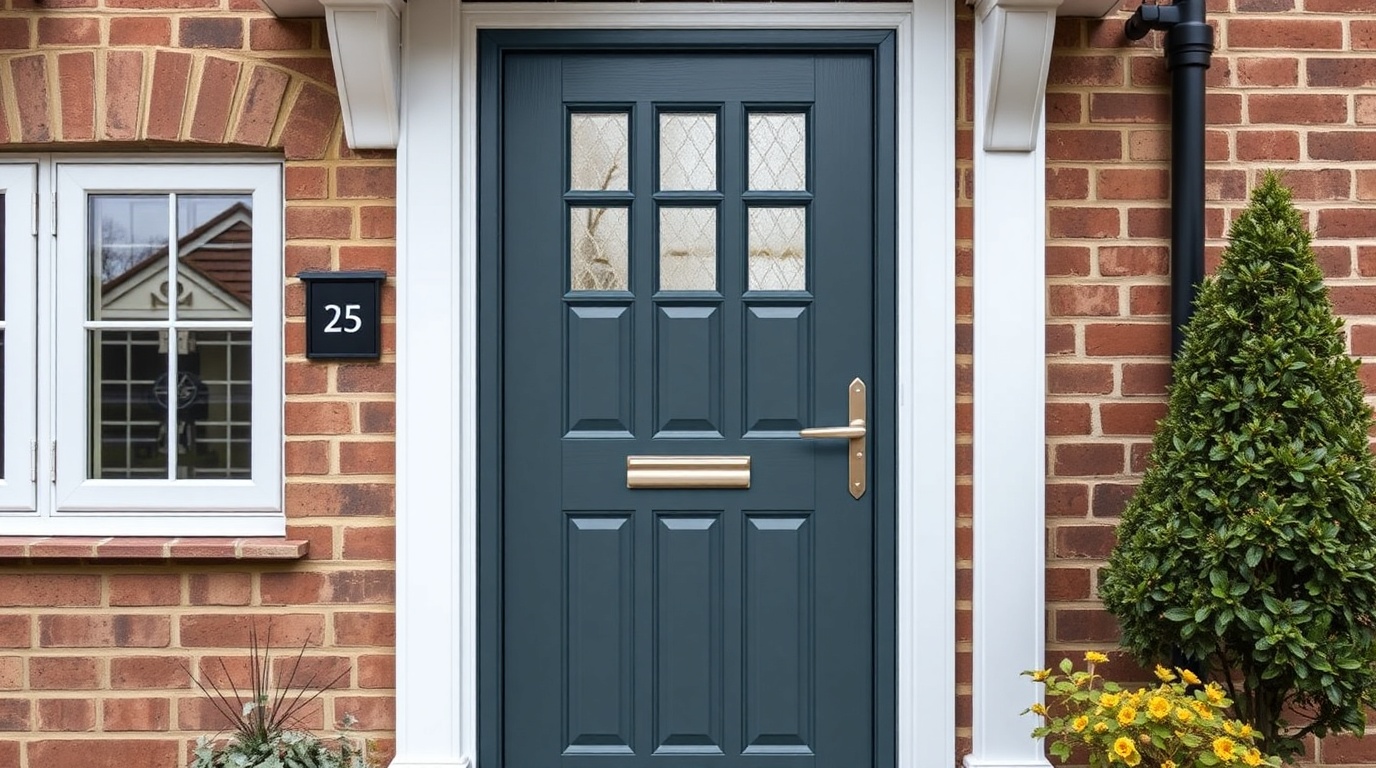
The short answer
Composite doors offer a range of glazing, including clear, obscure or frosted, and decorative leaded or coloured designs, in toughened or laminated safety glass, with options for the amount of glass from a small viewing pane to large glazed panels and side or top lights. The glazing choice balances natural light against privacy. Obscure and frosted glass let light in while limiting the view inside, and decorative designs add character. For safety and security, glazing in doors should be toughened or laminated; laminated glass holds together if broken and is harder to break through. Double or triple glazing improves insulation. Side panels and fanlights extend the glazed area around the door.
Glazing shapes both the look and the practicality of a composite door, affecting light, privacy, safety and security.
Glazing options
- ClearMaximum light
- Obscure/frostedLight with privacy
- DecorativeLeaded, coloured designs
- Safety glassToughened or laminated
- ExtrasSide panels, fanlights
Types of glazing
Composite doors can be ordered with a wide variety of glazing, from a small glazed aperture to a large panel making up much of the door, plus glazed side panels and top lights around it. The main decision is the balance between letting in natural light and keeping privacy, alongside the style of glass design. The table summarises the common options and what each offers.
Beyond the type of glass, the amount and position of glazing varies: a fully solid door for maximum privacy and security, a small viewing pane, a half-glazed design, or large panels for a bright, open look. Side panels and fanlights extend the glazed area for hallways that need more light.
| Glazing type | Light | Privacy |
|---|---|---|
| Clear glass | Maximum | Low |
| Obscure / frosted | Good | High |
| Decorative / leaded | Varies with design | Medium to high |
| Coloured / stained-effect | Varies | Medium |
| Solid (no glazing) | None in door | Maximum |
Choose the balance of light and privacy that suits the entrance.
Privacy and decorative designs
For most front doors, privacy is a consideration, especially where the door faces a street or path. Obscure and frosted glass is the common answer, available in different levels of obscurity so you can choose how much is hidden. A higher obscurity level lets light through while making it very hard to see inside.
Decorative glazing adds character. Options include leaded designs, bevelled glass, coloured or stained-glass effects and contemporary patterns, ranging from traditional to modern. These let you personalise the door and coordinate with the property's style. Decorative designs often combine with a chosen obscurity level so you get both privacy and visual interest. The exact catalogue of designs varies by brand, so view the available patterns when ordering.
Safety and security glass
Glazing in a door is a safety and security matter, not just a style one. For safety, glass in and around doors should be toughened or laminated so it does not shatter into dangerous shards if broken. Toughened glass breaks into small blunt pieces, while laminated glass holds together on an interlayer even when cracked.
For security, laminated glass is the stronger choice, particularly near the lock, because it resists being broken through to reach the handle inside. A determined intruder finds laminated glass much harder to defeat. If your door has glazing close to the locking point, specifying laminated glass there is a sensible upgrade. The glazing should be securely bonded or beaded so the unit cannot simply be removed from outside.
Insulation and choosing your glazing
Glazed units affect the door's thermal performance. Double glazing is standard, and triple glazing is available for better insulation, though the benefit depends on the overall door and how much of it is glazed. A larger glazed area lets in more light but can let out more heat than a solid panel, so balance light against insulation if energy efficiency is a priority. Ask for the door's U-value with the glazing specified.
When choosing, think about the entrance as a whole: how much light the hallway needs, how much privacy you want, whether decorative glass suits the property, and what safety and security glazing is appropriate. Side panels and fanlights can add light without enlarging the door's own glazing. A good installer will help you balance these so the finished door looks right, performs well and meets safety requirements for glass in doors.
Frequently asked questions
Can composite doors have obscure glass for privacy?
Yes, obscure and frosted glass is a common choice, available in different levels of obscurity so you can control how much is hidden. Higher obscurity levels let light through while making it very hard to see inside, which suits front doors facing a street or path.
Should composite door glass be toughened or laminated?
Glass in and around doors should be toughened or laminated for safety. Laminated is the stronger choice for security, especially near the lock, because it holds together when broken and resists being broken through to reach the handle inside.
Can I add side panels or a fanlight to a composite door?
Yes, glazed side panels and top lights or fanlights can be added around a composite door to bring more light into a hallway without enlarging the door's own glazing. The available designs and sizes depend on the brand and the opening.
Sources & further reading
- HomeOwners Alliance — front doors guide
- Which? — buying a new front door
- Checkatrade — composite door cost guide
Figures on this page are typical UK ranges drawn from published sources and depend on your specific door and opening. They are guidance, not a quotation.