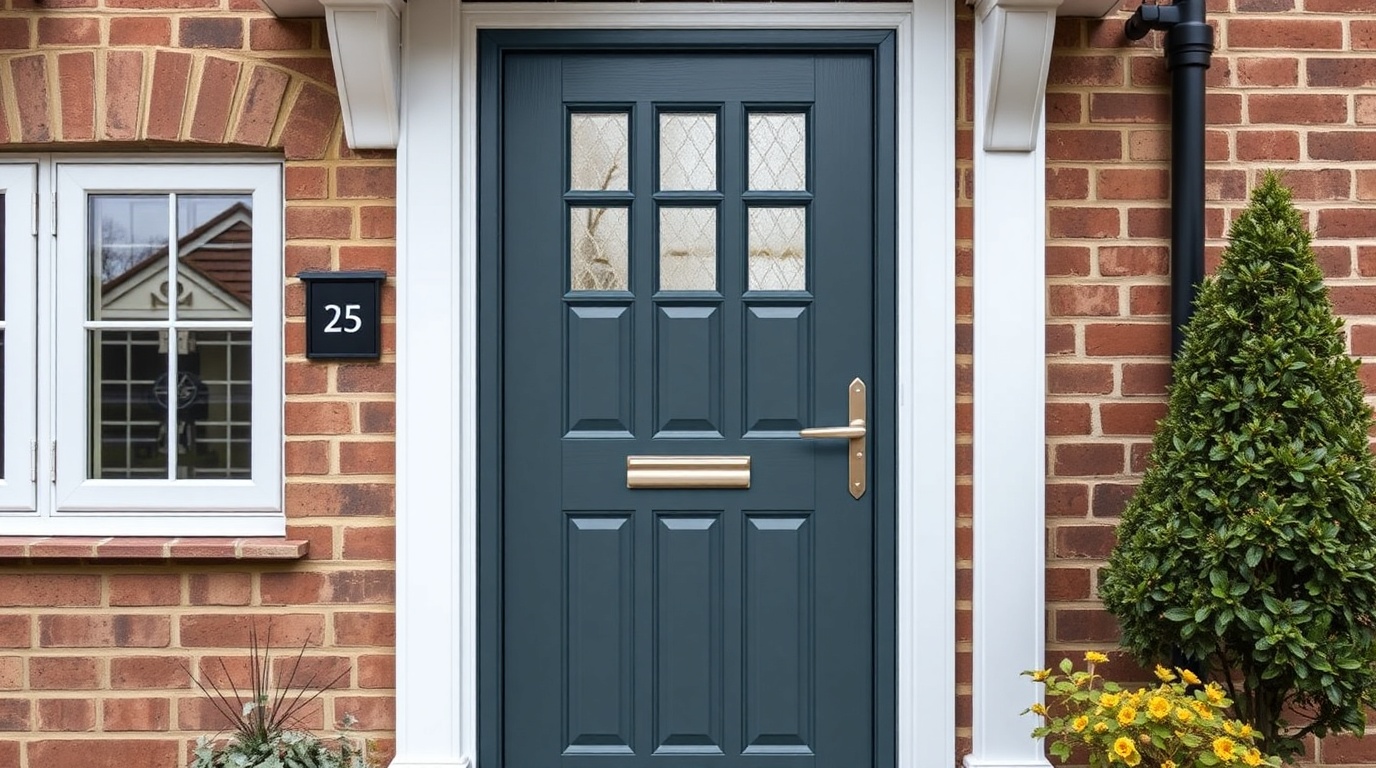
The short answer
The lowest-cost composite front doors in the UK start at roughly £400 to £700 supply-only for a basic standard-size door, but a budget price usually means a foam-filled core, basic hardware, minimal glazing and no fitting. Going cheap is possible by choosing a standard size and colour, plain glazing and an unbranded door, then fitting it yourself or with a separate tradesperson. The trade-offs are in feel, security, finish quality and warranty. For a low-traffic or secondary door a budget option can be sensible; for a main front door, cutting too far on the core, lock or fitting can cost more in the long run.
A composite front door can be bought cheaply, but the savings come from specific compromises; knowing where they are helps you decide which are acceptable.
Quick reference
- Budget supply-only~£400–£700
- Mid-range supply-only£800–£1,300
- Lowest-cost routeStandard size, plain, self-fit
- Main trade-offsCore, lock, finish, warranty
How low the price can go
Composite front door prices span a wide band, and the bottom end is reached by stripping the specification back. The table shows indicative 2026 UK ranges from budget to mid-range, for guidance.
The lowest-cost doors are standard-size, common-colour, plain-glazed, foam-filled, unbranded slabs bought supply-only. Each step up, a bespoke colour, decorative glazing, a solid core, branded manufacture or fitting, adds cost. So a headline figure of a few hundred pounds is achievable, but it rarely includes fitting, a new frame or premium hardware, and the door itself is at the basic end.
| Tier | Typical supply-only cost | What you get |
|---|---|---|
| Budget | £400–£700 | Standard size, foam core, plain |
| Lower mid-range | £700–£1,000 | Some colour / glazing choice |
| Mid-range | £1,000–£1,300 | Better hardware, branded |
| Add fitting | +£200–£600 | Labour, removal, sealing |
Indicative UK figures for guidance. Sources: Checkatrade and MyJobQuote door cost guides.
Where the savings come from
A cheap composite front door reaches its price by economising on specific things:
- Core — a foam-filled rather than solid core keeps cost and weight down.
- Hardware — basic handles, a standard lock and minimal furniture rather than upgraded, accredited security.
- Glazing — a solid slab or a single plain pane rather than decorative or obscured glass.
- Colour — a standard, popular shade rather than a bespoke or dual colour.
- Brand and warranty — an unbranded door with a shorter or vaguer guarantee.
- Fitting — supply-only, with you arranging or doing the installation.
None of these is automatically wrong; the question is whether each compromise is acceptable for your particular door and how you will use it.
The honest trade-offs
The trade-offs of going too cheap show up over time. A foam-filled budget door feels lighter and less reassuring than a solid-core door, though it can still insulate well. Basic hardware and a lower-grade lock matter most on a front door, where security is the point, so a very cheap lock is a false economy on a main entrance. A vague or short warranty leaves you exposed if the skin delaminates, the colour fades or the seals fail early. And supply-only puts the risk of a measuring error, which can render a made-to-measure door unusable, on you.
Poor fitting is often the bigger risk than the door itself. A budget slab fitted well can perform fine, but a door fitted badly, with poor sealing or a misaligned lock, will leak, stick or fail to secure regardless of its price.
When cheap is sensible
A budget composite front door can be a reasonable choice for a low-traffic or secondary entrance, a rental property where cost control matters, or a home you are about to sell where a smart but inexpensive door improves the look without a large outlay. If you have a competent fitter or are confident measuring and hanging an external door yourself, supply-only saves the fitting margin.
For a main front door you plan to keep, it is usually worth avoiding the very bottom of the range. Spend where it counts, on a sound core, a strong multipoint lock and a good fit, and economise where it does not, on a standard colour and plain glazing. A mid-range branded door fitted by a registered installer often represents better long-term value than the lowest-cost possible slab, because it lasts longer, secures better and carries a meaningful warranty. Whatever you choose, confirm whether the price is supply-only or fitted, check the warranty terms, and make sure the lock and fitting are not the corners being cut. Buying carefully at the lower-middle of the range usually beats chasing the very lowest headline figure for a door you rely on every day.
Frequently asked questions
Why are some composite doors under £500?
A door at that price is usually a standard-size, foam-filled, plain-glazed, unbranded slab sold supply-only with basic hardware. It can be fine for a secondary door, but the price rarely includes fitting, a new frame or premium security.
Is a cheap composite door secure?
It depends far more on the lock and fitting than the price. A budget door with a strong multipoint lock, fitted well, can be secure. A cheap lock or a poor fit undermines security regardless of the slab, so do not economise there on a front door.
Should I buy the lowest-cost door for my main entrance?
Usually not. For a main front door, a mid-range branded door with a good core, a strong lock and professional fitting tends to offer better long-term value than the lowest-cost slab, through longer life, better security and a meaningful warranty.
Sources & further reading
- Checkatrade — composite doors buying guide
- MyJobQuote — new front door cost
- HomeOwners Alliance — front doors guide
Figures on this page are typical UK ranges drawn from published sources and depend on your specific door and opening. They are guidance, not a quotation.