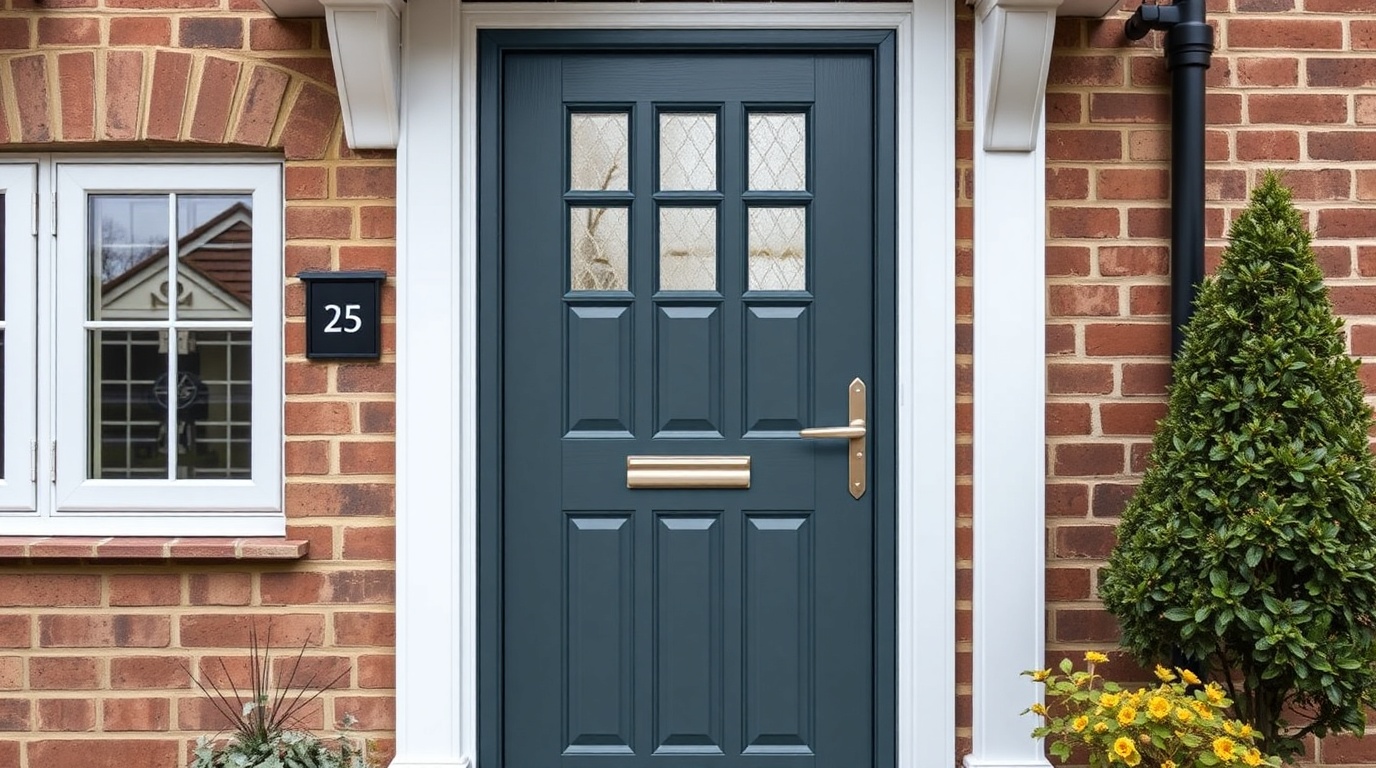
The short answer
You can fit a composite door yourself if you are a competent DIYer, but there are real practical and regulatory reasons most people use a professional. Technically the job is achievable: remove the old door, fit the new frame plumb, level and square, fix it securely, hang and adjust the slab, then seal and finish. It needs accurate measuring, the right tools, and care, because the frame must be true and securely fixed for the door to lock and weatherproof properly. The bigger issue is certification: replacing an external door is controlled under the Building Regulations, and a DIY fit cannot be self-certified through a competent-person scheme like FENSA — you would need to arrange a building control application instead. For most homeowners, the combination of skill required, security implications and the certification route makes professional installation the simpler choice.
Fitting your own composite door is possible, but it is not just a question of can you physically do it. This page covers the practical skills, the tools, and the building-regulations catch that often tips the decision toward a professional.
DIY fitting at a glance
- Physically possible?Yes, for a competent DIYer
- Critical skillFitting the frame true and secure
- CertificationCannot self-certify via FENSA
- DIY route to complyBuilding control application
- Most common choiceProfessional installation
What fitting a composite door yourself involves
The physical task is within reach of a confident DIYer, but it demands precision. The core challenge is the frame: it has to be set plumb, level and square using packers, then fixed securely into solid structure at the right points. If the frame is even slightly out of true, the door will catch, the gaps will be uneven, and — most importantly — the multi-point lock will not engage cleanly into its keeps, which compromises both operation and security. Getting this right is the difference between a door that works for years and one that drags, leaks or fails to lock.
You also need the right tools and materials: a good spirit level, drill and appropriate frame fixings, packers, sealant and insulation, and the means to handle a heavy slab safely (composite doors are weighty, and a second pair of hands is more or less essential). And you need to prepare and finish properly — a sound opening, weatherproof sealing outside, insulation and trims inside, and careful adjustment of the hinges, keeps and seals at the end. None of this is exotic, but it leaves little room for error: a small misjudgement on the frame can undermine the whole installation, which is why even capable DIYers sometimes regret tackling it.
The certification catch
Beyond the practical skill, there is a regulatory point that catches many DIY fitters out. Replacing an external door is controlled work under the Building Regulations — it has to meet the energy requirement (Approved Document L) and the work must be certified as compliant. The convenient route most professionals use is a competent-person scheme such as FENSA or Certass, which lets a registered installer self-certify the work and issue a certificate. A homeowner doing the job themselves cannot use that route, because those schemes are for registered installers.
That leaves the DIY fitter needing to notify and obtain sign-off through building control — making an application to the local authority (or an approved inspector) so the installation is assessed and certified. This adds cost, time and paperwork, and the work still has to demonstrably meet the regulations. The practical consequence is significant: without proper certification (either a FENSA/Certass certificate from an installer, or a building control sign-off), the replacement is not certified compliant, which can cause problems when you come to sell the house, as a buyer's solicitor will typically ask for the relevant certificate. For many homeowners, avoiding that complication is itself a reason to use a registered installer.
When DIY makes sense — and when it does not
DIY fitting can make sense for an experienced, well-equipped DIYer who is comfortable with accurate joinery and structural fixing, has help to handle the slab, and is prepared to arrange building control certification. If you fall into that group and the opening is sound and the right size, the job is achievable and you save the labour cost.
It makes less sense — and a professional is the better call — when any of the following apply: the opening needs altering (resizing, a new lintel, structural making-good), you are not confident getting the frame perfectly true and securely fixed, you want the simplicity of a FENSA or Certass self-certified installation, or the door is being fitted to a new dwelling where security (Approved Document Q / PAS 24) and access (Document M) requirements apply and need to be demonstrated. There is also a security dimension: a PAS 24 door only delivers its tested resistance when fitted correctly, so a poor DIY fit can quietly undermine the very security you paid for. Weighing the skill required, the certification route and the security stakes, most homeowners conclude that professional installation is the lower-risk and often simpler option, even though the door itself can, in principle, be fitted by a competent DIYer.
If you do fit it yourself: getting it right
For the experienced DIYer who decides to go ahead, a few priorities make the difference between a sound job and an expensive lesson. First, measure carefully and order the right size for your opening, including the correct threshold for your floor levels — a door that does not suit the opening is a problem before you start. Second, treat the frame as the critical task: pack it with shims until it is genuinely plumb, level and square (check the diagonals, not just one level reading), and fix it into solid structure with proper frame fixings concentrated near the hinges and lock keeps. Third, get a second person to help handle the heavy slab safely.
The finishing steps matter just as much as the fitting. Adjust the hinges and keeps so the gaps are even and the multi-point lock engages cleanly without being forced — a lock that only half-engages is both insecure and short-lived. Seal the outside joint with weatherproof sealant, insulate and trim the inside, and keep the threshold drainage clear so water drains outward. Then arrange the building-regulations certification through building control, since you cannot self-certify via FENSA or Certass. Throughout, follow the manufacturer's fitting instructions, which often carry warranty conditions. Done with this care, a DIY fit can be perfectly sound — but the long list of things that must each be right is exactly why many capable DIYers still hand this particular job to a registered installer.
Frequently asked questions
Is it legal to fit my own composite door?
Yes, you can fit your own door, but the replacement is controlled work under the Building Regulations and must be certified. A homeowner cannot self-certify through FENSA or Certass (those schemes are for registered installers), so you would need to arrange a building control application to demonstrate and certify compliance.
What is the hardest part of fitting a composite door?
Setting the frame plumb, level and square and fixing it securely into solid structure. If the frame is out of true, the door catches, the seals are uneven, and the multi-point lock will not engage cleanly into its keeps, which undermines both operation and security. Precision at this stage is essential.
Will a DIY-fitted door cause problems when I sell?
It can if the work is not certified. Buyers' solicitors typically ask for a FENSA or Certass certificate or a building control completion certificate for replacement doors and windows. A DIY fit without that certification can hold up a sale, so arranging proper sign-off matters.
Sources & further reading
- FENSA — building-regulations compliance for windows and doors
- gov.uk — Building Regulations Approved Document L (conservation of fuel and power)
Figures on this page are typical UK ranges drawn from published sources and depend on your specific door and opening. They are guidance, not a quotation.