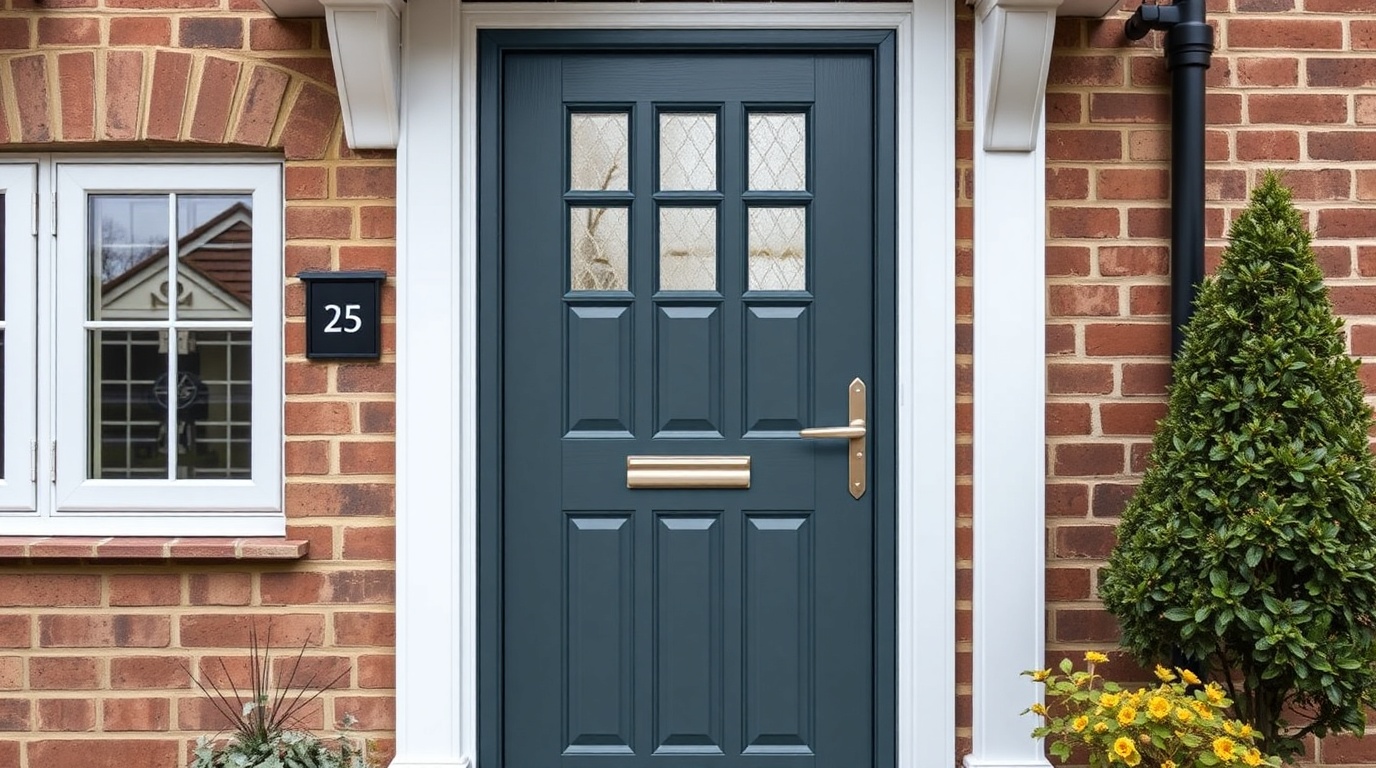
The short answer
For most UK homeowners a composite door is worth the extra cost over uPVC, because its solid multi-layer construction offers better durability, security, insulation and a longer lifespan that offsets the higher upfront price. A composite door typically costs more than uPVC but less than timber, and commonly lasts around twenty to thirty years with little maintenance. It resists warping, fading and weathering better than timber and feels more solid than uPVC. Whether it is worth it for you depends on how long you will stay, how exposed the door is, and how much you value security and appearance over the lowest possible price.
A composite door costs more than uPVC, so the value question comes down to durability, security, insulation and how long you keep the property.
Quick reference
- Typical lifespan~20–30 years
- vs uPVCMore durable, more secure, dearer
- vs timberLower maintenance, often cheaper
- MaintenanceMinimal, occasional cleaning
What you pay more for
A composite door costs more than uPVC because it is built from several materials laminated together, typically a solid or foam-filled core, a weather-resistant skin and a reinforced frame. That construction is what delivers the benefits people pay for. The table sets out where the extra money goes compared with a cheaper uPVC door.
The higher price buys a heavier, more solid door that resists impact and weather, holds its colour, and houses a robust multipoint locking system. For a main entrance that is seen and used every day, many homeowners judge that worth paying for; for a low-traffic secondary door, the case is weaker.
| Aspect | Composite door | uPVC door |
|---|---|---|
| Upfront cost | Higher | Lower |
| Construction | Multi-layer solid core | Hollow / reinforced plastic |
| Typical lifespan | ~20–30 years | ~15–25 years |
| Feel and security | Solid, robust | Lighter, adequate |
| Colour retention | Strong | Can fade over time |
General comparison for guidance. Sources: Checkatrade and HomeOwners Alliance door guides.
The case for composite
The strongest arguments in favour of a composite door are:
- Durability — the solid core resists warping, swelling and cracking, and the skin shrugs off weathering better than timber or thin uPVC.
- Security — a heavy slab with a quality multipoint lock is harder to force, and many doors carry recognised security accreditation.
- Insulation — the insulated core helps keep heat in, which can modestly reduce draughts and heat loss compared with an older door.
- Low maintenance — unlike timber, it does not need regular repainting or treating; an occasional wipe keeps it looking good.
- Appearance — a wide range of colours and woodgrain finishes gives a timber look without the upkeep.
Over a twenty to thirty year life, the lack of repainting and the lower chance of replacement can offset the higher purchase price compared with cheaper doors that may need replacing or refinishing sooner.
When it may not be worth it
A composite door is not always the right call. If you are selling soon, you may not recover the extra cost, and a sound existing door might only need adjusting or a new lock rather than full replacement. For a sheltered internal-access or outbuilding door that sees little weather and low traffic, a cheaper uPVC door may be perfectly adequate. And if budget is tight, the gap between a basic uPVC door and a composite door can be the difference between affording the project now or not.
It is also worth being realistic about the benefits. A composite door improves on an old, draughty door, but it will not transform a home's energy bills on its own, and the security advantage depends on it being well fitted with a good lock, not just on the door type.
How to decide
Weigh the higher cost against how long you will stay, how exposed and well-used the door is, and how much you value security, appearance and not having to repaint. For a main front door on a home you plan to keep, a composite door usually justifies its price through durability, security and low maintenance over its life. For a secondary door, a tight budget or an imminent sale, a cheaper option may make more sense.
If you do choose composite, the value depends on getting a good-quality door well fitted. A budget slab poorly installed can disappoint, while a solid-core door from a recognised maker, fitted by a registered installer with a strong multipoint lock, delivers the durability and security that make it worth the money. Look at the warranty on the slab, glass and hardware, check the installer is registered with FENSA or an equivalent scheme so the glazing is self-certified, and compare like-for-like specifications rather than headline prices. Judged on long-term performance rather than upfront cost alone, a well-chosen composite door is worth it for most homeowners replacing a tired or insecure main door.
Frequently asked questions
Do composite doors add value to a house?
A smart, secure front door improves kerb appeal and the first impression of a home, which can support its saleability. Whether it adds measurable value depends on the property and market, so treat it as an improvement to appearance and security rather than a guaranteed return.
How long do composite doors last?
A good-quality composite door commonly lasts around twenty to thirty years or more with minimal maintenance. The solid core resists warping and the skin holds its colour, though hinges, seals and locks may need attention over time.
Are composite doors more secure than uPVC?
Generally yes. A composite door's heavier, solid-core construction and quality multipoint locking make it harder to force than a lighter uPVC door, and many carry recognised security accreditation. Good fitting and a strong lock matter as much as the door type.
Sources & further reading
- HomeOwners Alliance — front doors guide
- Checkatrade — composite doors buying guide
- Which? — front doors advice
Figures on this page are typical UK ranges drawn from published sources and depend on your specific door and opening. They are guidance, not a quotation.