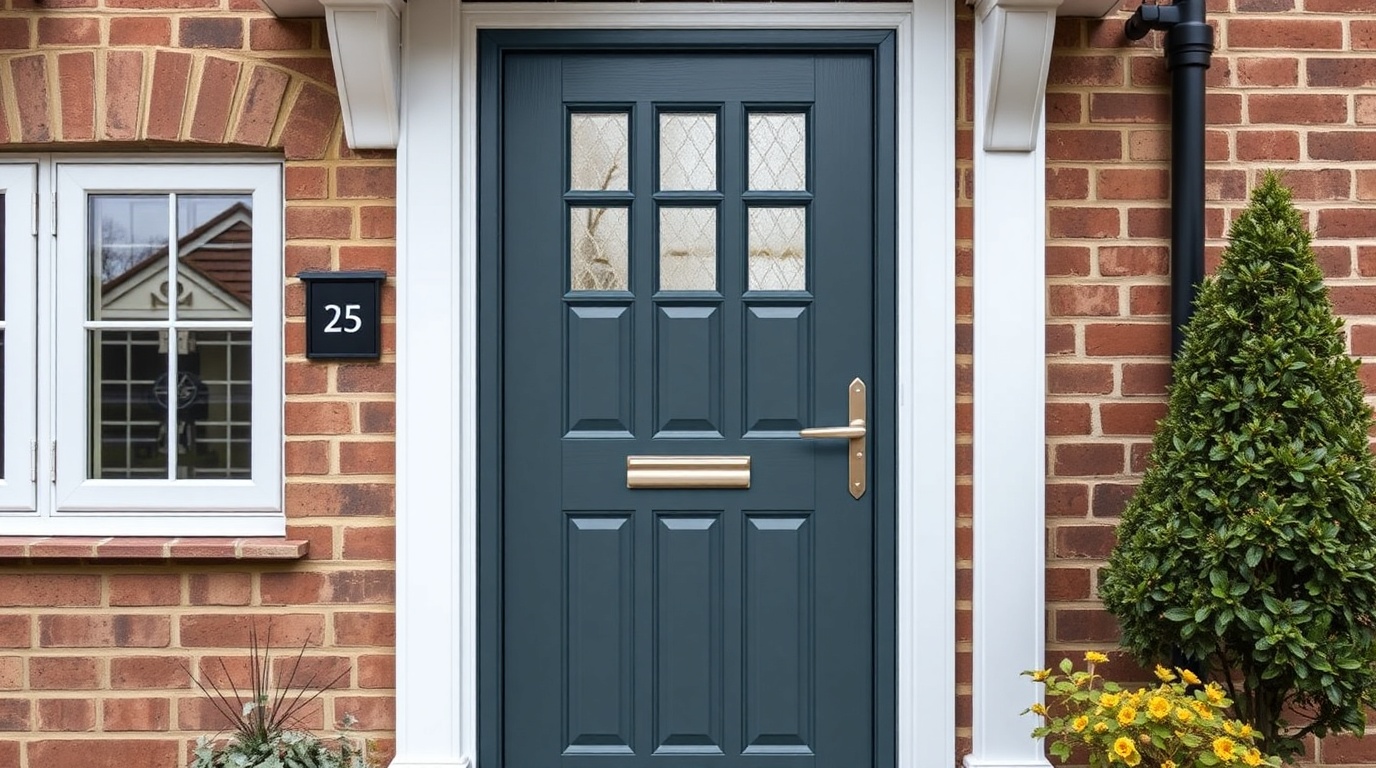
The short answer
Composite doors are highly customisable: you can choose the door style and panel design, the colour (often inside and outside separately), the glazing design and obscurity, the hardware and finish, and frequently the size, with some ranges offering bespoke or RAL-matched options. Most brands let you configure a door from a wide menu of styles, colours and glazing, so two homes rarely end up with identical doors. Dual-colour finishes, decorative glass, a choice of handles, letterplates and knockers, and made-to-measure sizing all add flexibility. Fully bespoke choices, such as custom colours or unusual sizes, increase cost and lead time. The result is a door that can be tailored closely to a property's style and your preferences.
Composite doors are designed to be configured rather than bought off the shelf, so most elements can be tailored to your home.
What you can customise
- StylePanel and door design
- ColourInside and out, sometimes RAL
- GlazingDesign and obscurity
- HardwareHandles, finish, extras
- SizeOften made to measure
What you can customise
Composite doors are typically built to order from a menu of choices, which is why they suit homeowners who want a door tailored to their property. The table summarises the main areas you can customise and what is involved in each. Together these allow a large number of combinations, so your door can be made distinctive rather than generic.
Most of these choices are standard parts of the ordering process at no unusual extra cost, while a few, such as fully bespoke colours or non-standard sizes, sit outside the standard menu and add to the price and lead time. A good installer will walk you through the options for the range they supply.
| Element | Typical choices | Notes |
|---|---|---|
| Door style | Panel layouts, traditional to modern | Wide menu per brand |
| Colour | Many shades, dual-colour | RAL-match on some ranges |
| Glazing | Clear, obscure, decorative | Toughened or laminated |
| Hardware | Handles, letterplate, knocker | Several finishes |
| Size | Standard or made to measure | Bespoke sizing costs more |
| Side panels | Glazed side or top lights | Extends the frame |
Indicative options; exact choices depend on the brand and installer.
Style, colour and glazing
The starting point is the door style: the panel layout and overall design, which ranges from traditional raised-panel looks to clean contemporary designs. From there, colour is one of the most flexible choices, with many solid shades and wood-grain effects, and dual-colour options so the outside and inside can differ to suit both kerb appeal and your hallway.
Glazing is equally configurable. You choose how much glass the door has, from solid to largely glazed, the obscurity level for privacy, and the design, whether plain, leaded, bevelled or coloured. Side panels and fanlights extend the glazed area around the door. These three areas, style, colour and glazing, do most of the work in making a door feel bespoke to your home.
Hardware, size and bespoke options
Hardware adds another layer of personalisation. You choose the handle type and finish, then optional letterplates, knockers, spy holes and numerals, usually matched in the same finish for a coordinated look. This lets you tune the door's character from modern to traditional without changing the slab itself.
Size is often customisable too. Many composite doors are made to measure for the opening, and non-standard sizes can usually be accommodated, though bespoke sizing adds cost. Some ranges go further with RAL-matched custom colours or unusual configurations. These fully bespoke choices give the most flexibility but increase price and lead time, so confirm both when ordering.
Limits and planning considerations
While composite doors are very customisable, there are limits. The available styles, colours and glazing depend on the brand your installer supplies, so the exact menu varies. Structural constraints of the opening can limit size and configuration, and very unusual requests may not be possible within a given range. Repairs to a customised door can also be harder, as a damaged bespoke skin is not easily refinished.
Planning rules are the other consideration. In conservation areas or on listed buildings, the choice of door material, colour and style may be restricted, and composite may not be permitted at all where genuine timber is required. Check with your local planning authority before committing to a customised door in these areas. Within those constraints, composite doors remain one of the more flexible front-door options, letting most homeowners create a door closely suited to their property.
Frequently asked questions
Can I choose a different colour inside and outside on a composite door?
Yes, dual-colour options are common, letting you pick a bold or dark exterior with a neutral white or cream interior to suit your hallway. The exact colour combinations available depend on the brand and range your installer supplies.
Can composite doors be made to a non-standard size?
Many composite doors are made to measure for the opening, and non-standard sizes can usually be accommodated. Bespoke sizing adds to the cost and lead time, and very unusual sizes may be limited by the range, so confirm with the installer.
Are there limits on customising composite doors?
Yes. The available styles, colours and glazing depend on the brand supplied, structural constraints can limit size, and conservation areas or listed buildings may restrict material, colour and style. Check local planning rules before customising a door in those areas.
Sources & further reading
- HomeOwners Alliance — front doors guide
- Which? — buying a new front door
- Checkatrade — composite door cost guide
Figures on this page are typical UK ranges drawn from published sources and depend on your specific door and opening. They are guidance, not a quotation.